
Be yourself; Everyone else is already taken.
— Oscar Wilde.
This is the first post on my new blog. I’m just getting this new blog going, so stay tuned for more. Subscribe below to get notified when I post new updates.
Be yourself; Everyone else is already taken.
— Oscar Wilde.
This is the first post on my new blog. I’m just getting this new blog going, so stay tuned for more. Subscribe below to get notified when I post new updates.

Hello fellow Bloggers! My name is Julio Hernandez and I am currently earning my credential to teach mild to moderate special education classes at CSULA. In all honesty this class has made me realize that getting started on something like a blog or a podcast is not that hard. And I think many of us have had those “I should have a blog” moments. I know I have. And one of the most common things I think is that everyone always makes it seem so easy, I mean, everyone seems to have one these days. So now that this technology class (EDSP 5100, shoutout to professor Kier!) has forced me to get started on a blog, I have to say that I’m actually kind of grateful.
The only real question going forward is; what do I blog about? I have no shortage of things that interest me. I love to ride bikes so that’s definitely one thing I can go on and on about. But I am also an adventurer and I love to explore new things and places. Oh and I love eating ramen! Ultimately I decided to call my blog the LA Chronicles because so many of the things I love to do and explore are in this great city that I love. I’ve lived here for the vast majority of my life and I feel like I am still discovering so many new things.
So my goal is to share what I love about my city, with an added emphasis on making everything as accessible to everyone as possible. As with most things in life, this will be a work in progress, but that is ok in the blogosphere because (and this is also like most things in life), the most important step is to just get started!
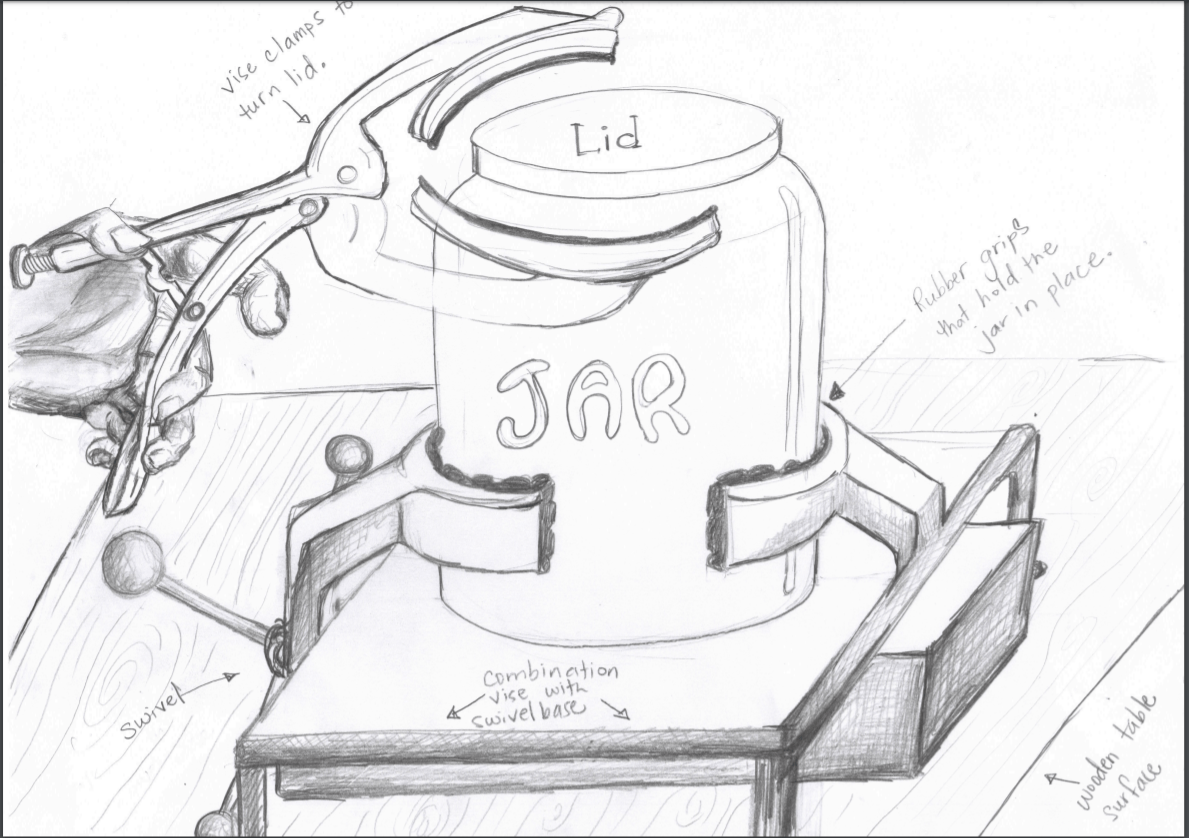
My DIY instructable aid was meant to be a jar opener that can be used one handed. Unfortunately, the widespread pandemic made it virtually impossible to safely enter a Home Depot or other such warehouse. The crowds weren’t being managed well and social distancing was virtually non-existent. I was able to ask a highly talented friend of mine if she could illustrate my concept for me. I told her over the phone about my idea and I even drew a (very) rough sketch of what I had in mind and sent it over to her. Not ten minutes later she sent me her conception. As you can see it is pretty amazing. She did, however, take some artistic liberties with my description, so its not a perfect one to one representation of what I had in mind. The materials and steps are as follows:
MATERIALS
Wooden Board (14x9x2) x 1
Small Wooden Blocks (3×2) x 8
Double Sided Tape (Gorilla or 3M is best) x 1 roll
Rotating Swivel Vise x 1
Glue x 1
STEPS
In all the total cost of these items can be anywhere between 15-25 dollars. The largest expense is the swivel vise, but that can be a bit misleading. Most swivel vises promoted are for industrial use. The one I am recommending is more for casual use and I have seen some for as low as 8 dollars. Hope to make this a reality soon!

The virtual reality experience my students might enjoy is a virtual reality traveling experience. When I was in 5th grade, I remember that our teacher was a total francophile. She had us “plan” a trip to France by looking at a bunch of travel magazines and picking places we’d like to see and estimating how much our budget had to be. I recall that our teacher never explicitly said that we would actually go to France, but when our “planning” was over, I was utterly devastated that we weren’t actually going on our fantasy trip. In my early twenties, I saved up enough money to visit France for real, and though there is nothing like a travel experience, I would have been completely blown away if I could have taken a virtual tour of France!
I will be working with students in an urban environment. I believe that they can be profoundly impacted by seeing for themselves that there is, quite literally, a world of wonder out there for them to experience first hand. As i said earlier, I have been very fortunate to have traveled, and I am all too aware of how life changing it can be to see new places and people. This could also have applications in multiple disciplines, such as history, science, English, and even math. For example, a student learning about ancient Egypt could take a tour of the pyramids, they can see the rain forest if they are learning about ecosystems, and they can see a virtual performance of a Midsummer Night’s Dream. VR can be a powerful tool in the hands of the imaginative educator!

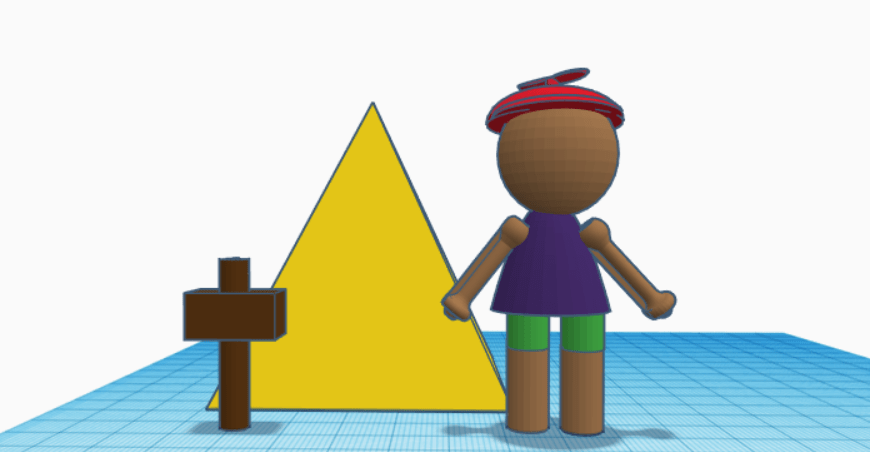
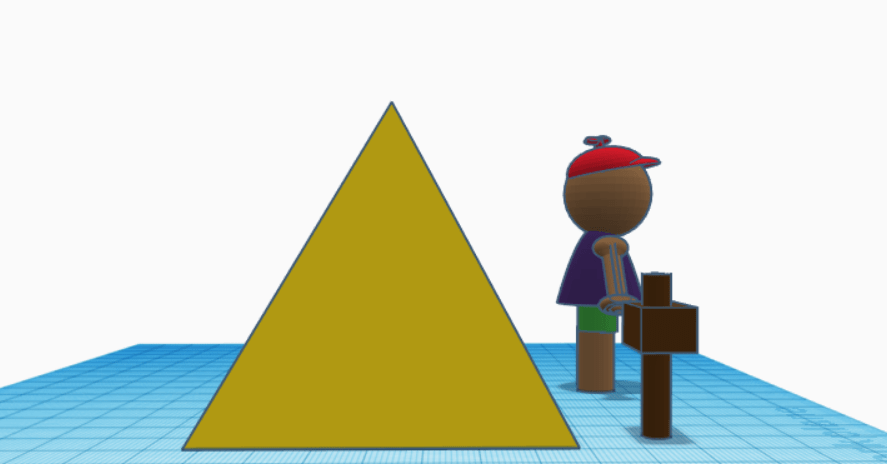
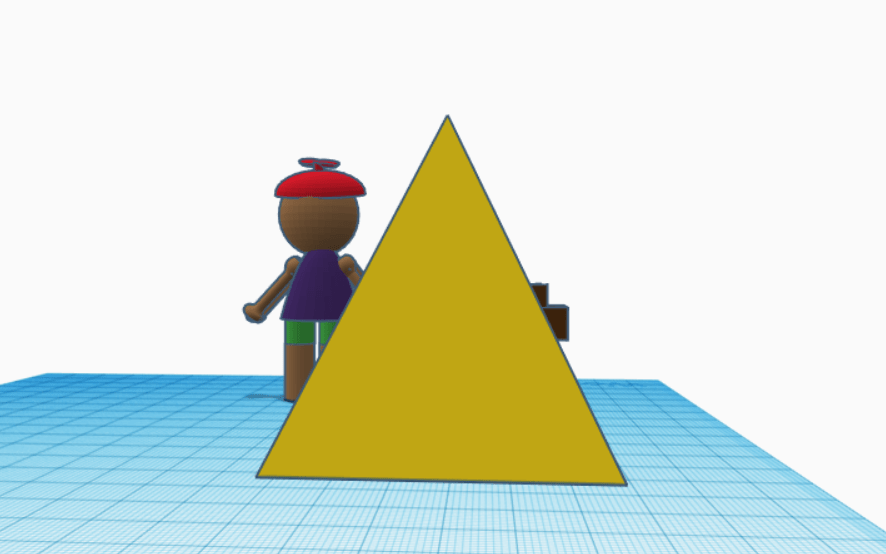
These 3D images were inspired by my time playing Animal Crossing New Horizons on my Nintendo Switch. I had never played an Animal Crossing before, but I think everyone can agree that this new installment in the series could not have arrived at a better time! The concept of the game is to live out your best life on a deserted island. These images capture the very beginning of the game. I 3D printed my avatar standing next to my tent and mailbox (even though it came out looking like a cross).
The experience itself was eye opening. On the one hand, the process was more straight forward than I imagined. It is a reminder of just how far technology has come because it wasn’t that long ago that 3D imaging and printing were not only a very hot topic, but prohibitively expensive. So to see that there are now tools out there that are not only available to the public, but affordable is amazing. On the other hand, this was much more challenging than the initial steps would suggest. You quickly realize that every little detail you add has consequences further down the road. For example, it took several attempts to get the placement of the tent just where I wanted it. So every placement of every object has to be carefully thought out because one thing can block another or the angles wont make sense. It turns out that capturing the real effects of three dimensions gets very tricky. Makes me have a deeper respect for the creators of games such as Animal Crossing!
Content
This is an example post, originally published as part of Blogging University. Enroll in one of our ten programs, and start your blog right.
You’re going to publish a post today. Don’t worry about how your blog looks. Don’t worry if you haven’t given it a name yet, or you’re feeling overwhelmed. Just click the “New Post” button, and tell us why you’re here.
Why do this?
The post can be short or long, a personal intro to your life or a bloggy mission statement, a manifesto for the future or a simple outline of your the types of things you hope to publish.
To help you get started, here are a few questions:
You’re not locked into any of this; one of the wonderful things about blogs is how they constantly evolve as we learn, grow, and interact with one another — but it’s good to know where and why you started, and articulating your goals may just give you a few other post ideas.
Can’t think how to get started? Just write the first thing that pops into your head. Anne Lamott, author of a book on writing we love, says that you need to give yourself permission to write a “crappy first draft”. Anne makes a great point — just start writing, and worry about editing it later.
When you’re ready to publish, give your post three to five tags that describe your blog’s focus — writing, photography, fiction, parenting, food, cars, movies, sports, whatever. These tags will help others who care about your topics find you in the Reader. Make sure one of the tags is “zerotohero,” so other new bloggers can find you, too.
 LA Chronicles